Spy Wednesday

Wednesday before Easter
Some days of the year have fantastic names yet are lost in obscurity, so for the sake of keeping the names alive I like to remember them. Spy Wednesday is definitely one of these, though to explain it I will need to offer some context. The three days before Easter—Maundy Thursday, Good Friday, and Holy Saturday—are known as the Triduum, and during these days there are specific services and rites to be carried out within churches, including the Tenebrae, which means ‘darkness’ in Latin. The Tenebrae would be held the evening before the day they commemorated, so the first Tenebrae would take place the night before Maundy Thursday, on Spy Wednesday.
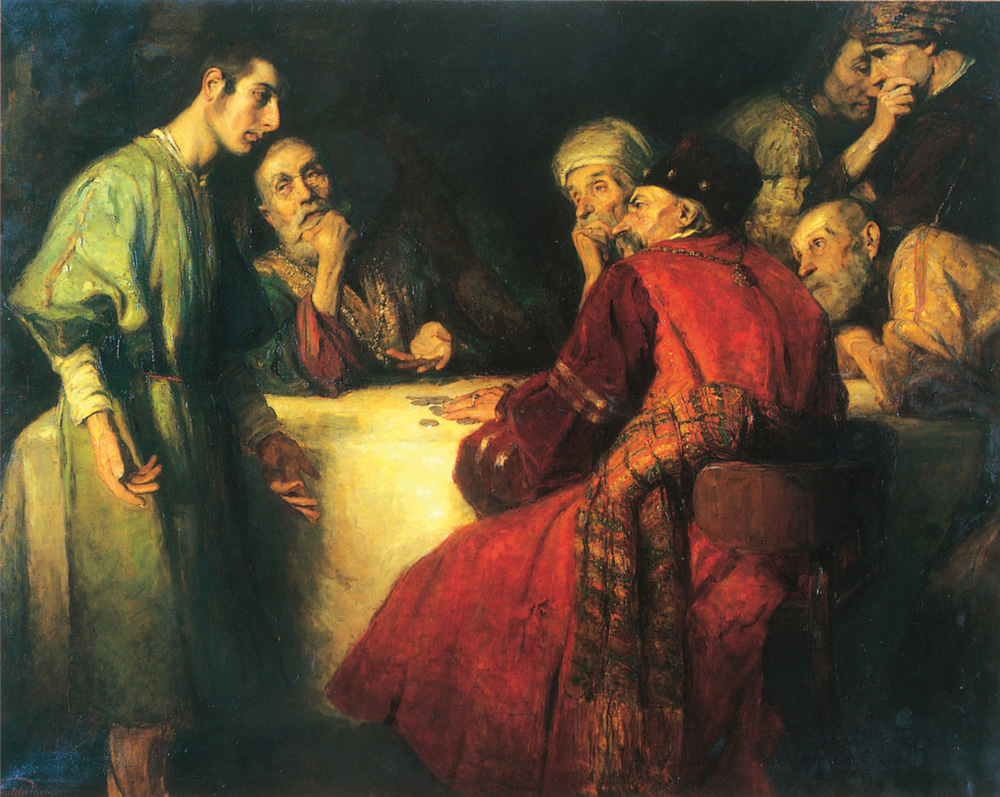
Spy Wednesday is named after Judas Iscariot, who was referred to as a spy by the old definition of the word, which meant ‘ambush,’ ‘snare,’ or ‘trap.’ According to Biblical narratives, on the Wednesday before he was crucified Jesus went to the house of Simon the leper to eat, and a woman named Mary wept at his feet then washed his feet in her tears, dried them with her hair, and anointed his feet and head with expensive ointment. After eating, Judas went to the Sanhedrin—the Jewish court—in Jerusalem and offered to deliver Jesus to them for thirty pieces of silver. Judas was a popular and relatively sympathetic character in Middle Ages, with poems written about him and his reasons for betraying Christ. He was also a regular character in mummers plays during events such as Epiphany.
Then saith one of his disciples, Judas Iscariot, Simon’s son, which should betray him, Why was not this ointment sold for three hundred pence, and given to the poor? This he said, not that he cared for the poor; but because he was a thief, and had the bag, and bare what was put therein.
John 12:4–6, KJV
The traditional service on Spy Wednesday involves putting out candles which are mounted upon a triangular candelabra stand called a hearse. They would be extinguished one by one, and between each were psalms or recitals. The service would conclude in total darkness once the sun had set, during which a book would be slammed shut or struck against a pew or table, or dropped upon the floor, to make a loud and sharp sound known as the strepitus, which is Latin for ‘great noise.’ This represented the earthquake that supposedly took place following the death of Jesus. The congregation then leaves the darkened church in silence.
The Tenebrae are still acknowledged to this day, though the structure of the rituals has changed and been reformed. Whilst the influence of the church over day-to-day life is considerably less than in the Middle Ages, Holy Week remains part of British culture, though Spy Wednesday itself is less recognised than the days which follow. I am not one for organised religion per se, but the ritualistic idea of snuffing candles and reciting poetry until faced with complete darkness and ending with a bang interests me a lot. Perhaps it is time to reinvent the Tenebrae, appropriating it from the church much like the church has with most ancient British customs and folklore. Here’s to the new Spy Wednesday.